Best Mixers
A mixer is what you buy when you have more sources than an interface has knobs, or when you want to set levels with your hands instead of a mouse. That covers two fairly different people: the musician balancing several inputs into a recording, and the streamer or podcaster routing game audio, a microphone and a call into separate channels. Most current mixers double as USB audio interfaces, so the choice is usually not mixer versus interface, it is whether you want physical channel strips in front of you.
9 mixers tracked, prices checked weekly by Elan Harpaz.
All 9 mixers
Ordered by our own picks first, then by Amazon rating weighted by review count.

Professional Audio Mixer, Phenyx Pro Sound Console w/USB Audio Interface, 4-Channel Sound board DJ Mixer w/Stereo Equalizer, 16 DSP Effects, suitable for Stage, Live Gigs, and Karaoke (PTX-15)
Observed
Best for: A first mixer for a small setup that has outgrown a two-input interface.

TC Helicon GoXLR MINI Online Broadcast Mixer with USB/Audio Interface and Midas Preamp, Officially Supported on Windows
Observed

Behringer XENYX X1204USB Premium 12-Input 2/2-Bus Mixer with XENYX Mic Preamps and Compressors, British EQ, 24-Bit Multi-FX Processor and USB/Audio Interface | Includes rack hardware, software and 1 year warranty for recording, mixing and monitoring
Observed

Behringer XENYX 1204USB Premium 12-Input 2/2-Bus Mixer with XENYX Mic Preamps and Compressors, British EQ and USB/Audio Interface
Observed

Yamaha AG06MK2 Black 6-Channel Live Streaming Loopback Mixer/USB Interface with Steinberg Software Suite
Observed
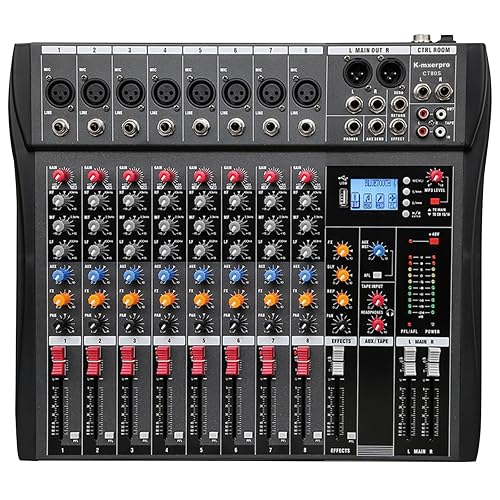
8 Channel Professional Audio Mixer Console Sound Board with 48V Phantom Power,USB Audio Interface for Live Show,Streaming Recording Music Stage Karaoke
Observed

XTUGA 8 Channel Audio Mixer, Professional Sound Board Mixer, DJ Mixing Console System Audio Interface,48V Phantom Digital Effect for PC Podcast Studio Karaoke Streaming Live Recording(CT80)
Observed

Frequently asked questions
Should I buy a mixer or an audio interface?
An interface, if you record one or two sources at a time and mix inside your DAW. A mixer, if you need to balance several live sources in the moment, or you want faders and knobs under your hands rather than on a screen. Many mixers also connect over USB, so buying a mixer rarely means giving up computer recording.
What does phantom power mean and do I need it?
Phantom power, usually labelled 48V, sends voltage up the cable to run a condenser microphone. Condenser mics need it, dynamic mics do not, and leaving it on does no harm to most modern gear. If you own or plan to own a condenser mic, make sure the channels you will use actually offer it.
Do more channels always help?
No. Channel count sets your ceiling but every unused strip is money and desk width. Count the sources you genuinely run at once, add one spare, and buy near that. A tidy eight-channel board beats a sixteen-channel one wedged sideways against a wall.